
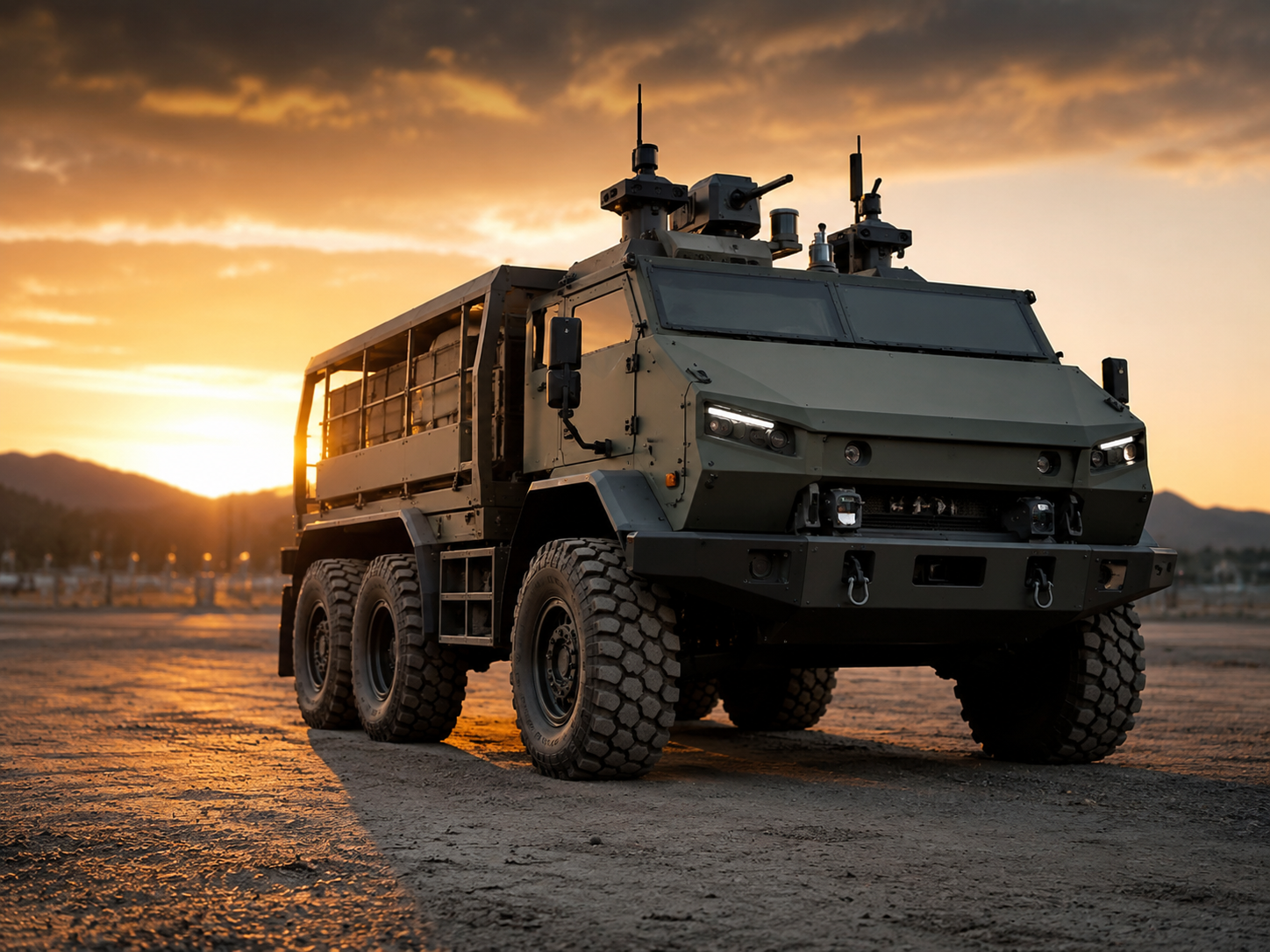
InDro Robotics Talos is a military grade autonomous vehicle platform that Victoria based robotics firm InDro Robotics is developing for the Canadian Armed Forces. Built on a UK designed Fering chassis, Talos can drive up to 7,000 kilometres, operate without GPS, and power a 50 bed field hospital for 10 days, positioning it as a potential mainframe for Canada’s autonomous defense capabilities.
Here is the thing. Canada has spent years talking about reducing its dependence on foreign defense suppliers. InDro Robotics may have just built the vehicle that proves it can be done.
Table of Contents
- What Is InDro Robotics
- What Happened With Talos
- Why It Matters for Canadian Sovereignty
- The Numbers Behind Talos
- What This Means for Canadian Startups
- How Talos Compares to Traditional Defense Procurement
- Key Takeaways
- FAQ
What Is InDro Robotics
InDro Robotics is a Victoria based robotics company founded in 2015 by Philip Reece. The company started as what Reece called an airline for drones, then expanded into software and ground robots, which now make up half of its business. InDro Robotics today employs 42 people and counts Nokia, Rogers, and Google among its past clients, alongside a growing list of contracts with the Canadian Armed Forces.
The company operates out of Ottawa’s Area X.O, a nearly 2,000 acre research and testing site with 16 kilometres of test track built for autonomous vehicle development. That engineering base is a big part of why InDro Robotics Talos moved from concept to a working platform as quickly as it did.
What Happened With Talos
As BetaKit’s Alex Riehl first reported, InDro Robotics is converting a military truck called Talos into an autonomous, self powered command centre. The vehicle was originally designed by former Formula 1 engineers at UK defense firm Fering. InDro brought the platform to Canada and rebuilt it to handle colder temperatures, arctic conditions, and fully autonomous or remote operation, including navigation without GPS or communications.
The partnership happened because InDro founder Philip Reece and Fering chief commercial officer Gareth Reece are cousins. According to BetaKit, the two connected over their separate projects and realized their companies could work together, which is how InDro Robotics Talos ended up combining a UK chassis with Canadian autonomy software.
Talos is designed to work as a mobile command centre for a fleet of smaller autonomous vehicles and drones, not just as a standalone truck. InDro’s engineering team is still building out the drive by wire system that lets the vehicle replicate every control input a human driver would make, remotely. That drive by wire work is the piece that turns InDro Robotics Talos from a converted truck into a genuinely autonomous platform.
Why It Matters for Canadian Sovereignty
Canada’s Arctic and northern regions have very few permanent facilities, which makes self sufficient equipment valuable for both military and humanitarian missions. A vehicle that can travel long distances and generate its own power addresses a real gap rather than a hypothetical one.
This fits directly into Ottawa’s broader push for defense sovereignty. In February 2026, Prime Minister Mark Carney’s government launched Canada’s first Defence Industrial Strategy, aimed at reducing reliance on traditional suppliers such as the United States and building domestic capacity instead.
Canada Startup News at BestStartup.ca has been tracking how this shift is changing procurement timelines for smaller Canadian defense tech companies, and InDro’s experience is a clear example of that change in practice. InDro Robotics Talos is one of the clearest signs yet that Canada’s sovereignty push is producing real hardware, not just policy papers.
The Numbers Behind Talos
Talos carries four batteries and a diesel generator, giving it a range of roughly 7,000 kilometres, enough to cross Canada from Vancouver to Halifax with fuel to spare. Its onboard power system can reportedly run a 50 bed field hospital for 10 days, according to Philip Reece.
On the funding side, the federal government committed close to 82 billion dollars in defense spending over five years in its 2025 budget, a figure that includes the Defence Industrial Strategy funding InDro is now benefiting from. InDro was also recently named a qualified supplier under the Government of Canada’s new Defence Drone Initiative Marketplace, pre approving the company for direct purchases by the Canadian Armed Forces.
Philip Reece told BetaKit that what used to take three or four years for a defense contract to close now takes months, a timeline shift that changes the entire economics of building hardware for the Canadian military. These are the numbers that make InDro Robotics Talos stand out among current Canadian defense hardware projects.
[IMAGE 1: A rugged military style autonomous truck with tall all terrain wheels parked on a test track at golden hour, editorial magazine style, no text in image, dark navy and orange color tones ALT TEXT: InDro Robotics Talos autonomous vehicle 2026 4:3 ratio featured image]
Canada’s defense tech founders are not waiting for permission anymore. Every contract like the one behind InDro Robotics Talos makes the next one easier to close.
👉 Follow Canada Startup News at BestStartup.ca
What This Means for Canadian Startups
InDro’s path from a small drone startup in 2015 to a qualified defense supplier shows a route that other Canadian hardware companies can now realistically follow. Faster procurement timelines and a dedicated Defence Industrial Strategy mean startups no longer need a decade of relationship building before landing a first serious government contract.
It also signals a shift in what counts as exportable Canadian technology. InDro has reportedly sold its rebuilt version of Talos back to the UK, meaning a Canadian engineering team improved a foreign design well enough to become the export, not just the customer. InDro Robotics Talos shows founders that Canadian built hardware can now compete directly with imported platforms rather than just servicing them.
[IMAGE 2: A simple infographic style graphic showing a timeline from 2015 startup founding to 2026 defense supplier status, clean modern flat style, dark navy and electric purple gradient, no text in image ALT TEXT: Canadian defense tech startup growth timeline 2026]
How Talos Compares to Traditional Defense Procurement
Traditional military vehicle programs in Canada typically involve large multinational contractors, multi year design cycles, and imported platforms. Talos flips that model. A domestic robotics company took an existing foreign chassis, rebuilt the autonomy and power systems in Canada, and is now positioned to export the improved version.
That difference matters for the Defence Industrial Strategy’s stated goal of controlling technology and supply chains, not just owning finished equipment. A vehicle built and modified domestically is far easier to upgrade, repair, and adapt than one sourced entirely from an overseas prime contractor. InDro Robotics Talos is what that kind of domestic control looks like once it leaves the policy document and reaches a test track.
Key Takeaways
InDro Robotics Talos is a UK designed military truck that InDro Robotics is converting into an autonomous, self powered command centre for the Canadian Armed Forces. The vehicle can travel roughly 7,000 kilometres and power a 50 bed field hospital for 10 days. InDro was recently named a qualified supplier under Canada’s new Defence Drone Initiative Marketplace, and its operational prototype is expected by the end of 2026.
[IMAGE 3: A confident engineer reviewing autonomous vehicle diagnostics on a laptop next to a large rugged truck in an industrial testing facility, editorial magazine style, no text in image, dark navy tones ALT TEXT: InDro Robotics engineer testing autonomous vehicle Canada]
Want more startup news from Canada, the US, and India? BestStartup.ca covers the deals, founders, and policy shifts that matter most right now.
👉 Explore Latest Canada Startup News at BestStartup.ca
FAQ
What is InDro Robotics Talos?
Talos is a military grade autonomous vehicle platform that InDro Robotics is developing for the Canadian Armed Forces, built on a chassis originally designed by UK defense firm Fering and rebuilt in Canada for autonomous, GPS free operation.
How far can the InDro Robotics Talos travel?
Talos can reportedly travel roughly 7,000 kilometres on the power it carries onboard, enough to drive from Vancouver to Halifax with fuel to spare.
Who founded InDro Robotics?
InDro Robotics was founded in 2015 by Philip Reece, who launched the company after selling a small Vancouver based airline, initially describing InDro as an airline for drones.
What is Canada’s Defence Industrial Strategy?
Canada’s Defence Industrial Strategy, launched by Prime Minister Mark Carney’s government in February 2026, is a federal plan to reduce reliance on foreign defense suppliers and build domestic Canadian defense manufacturing and technology capacity.
When will the InDro Robotics Talos be ready?
According to BetaKit’s reporting, InDro’s operational Talos prototype is expected to be ready by the end of 2026, with a parallel version already undergoing trials with the Canadian Armed Forces.
Can InDro Robotics Talos be used for non military missions?
Yes. InDro has described potential uses including search and rescue in remote areas such as the Arctic, disaster response supply delivery, and acting as a mobile power source for field hospitals.
Sources: Alex Riehl, “How InDro Robotics is turning a giant truck into a mobile, autonomous command centre,” BetaKit, September 1, 2026. Prime Minister of Canada, “Prime Minister Carney launches Canada’s first Defence Industrial Strategy,” February 17, 2026.