
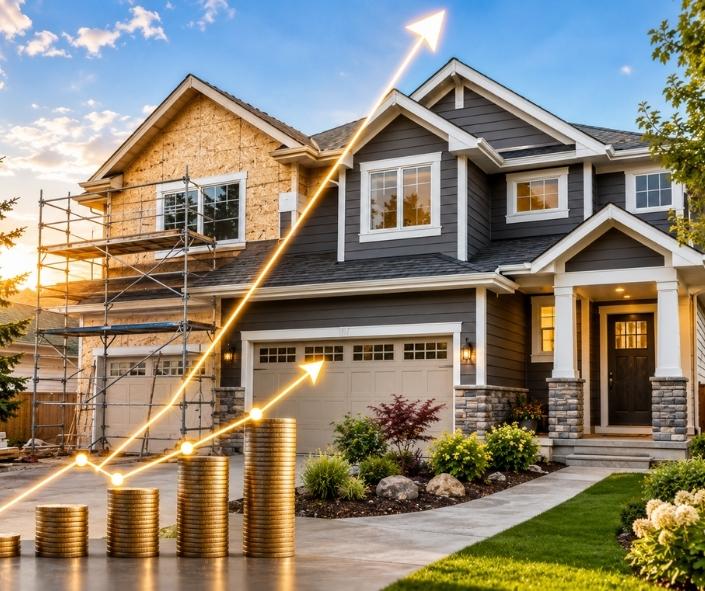
Most conversations about property investment in Alberta revolve around interior finishes, rental yield, or square footage. The exterior envelope rarely gets the same attention, yet it behaves more like a capital asset than a cosmetic feature. It absorbs the province’s weather, drives ongoing maintenance spend, and quietly shapes what a building appraises for. For founders, landlords, and property investors thinking in terms of long-term returns, siding is worth analysing the same way you’d analyse any other line item on a balance sheet.
The Cost of Deferring the Decision
Exterior cladding degrades on a curve, not a straight line. A property with ageing siding tends to look fine for years, right up until moisture finds a gap, and then costs escalate quickly: rot spreads behind the wall assembly, insulation loses effectiveness, and what would have been a planned renovation becomes an emergency repair. Owners who treat siding as a scheduled capital expense rather than a reactive one consistently spend less over a ten-year hold period, simply because they’re replacing material on their own timeline instead of the weather’s.
Climate as an Underwriting Variable
Alberta’s weather isn’t a backdrop to this decision, it’s a direct input into it. Calgary in particular sees some of the highest hail frequency in the country, layered on top of Chinook cycles that swing temperatures by 20 degrees in a matter of hours and put constant stress on building materials. Property owners evaluating renovation timelines in this market are increasingly pricing in impact resistance and thermal cycling tolerance as underwriting factors, not just aesthetic preferences, because the wrong material shortens the asset’s useful life and increases the odds of an insurance claim.
Material Selection as a Financial Decision
This is where the numbers start to matter more than the look. Steel and metal siding sit in the middle of the Alberta materials market at roughly $10.50 to $15.00 per square foot installed, but the return profile is stronger than the sticker price suggests. It carries a Level 4 hail-impact rating, meaning it withstands two-inch hailstones without the cracking or denting that forces vinyl or older cladding into early replacement, and it holds a Class A fire rating with essentially no flame spread. Maintenance runs to roughly two hours a year, an occasional wash and a visual check, which is a meaningfully lower carrying cost than materials that need repainting or resealing on a five-to-ten-year cycle. With a realistic service life of 40 to 70 years, the effective annualised cost is often lower than cheaper materials that need replacing twice in the same period.
Financing and Cash Flow Timing
For owners weighing renovation against other uses of capital, timing matters as much as total cost. Financing options that spread a siding project over monthly payments can make sense when the alternative is deferring the work until a forced repair, which almost always costs more per square foot due to emergency labour rates and water damage remediation. Treating exterior renovation as a financed capital improvement, rather than a lump-sum expense to be delayed, keeps cash flow predictable and avoids the compounding costs that come with reactive repairs.
The Resale and Rental Case
Exterior condition is one of the first data points a buyer, appraiser, or prospective tenant registers, often before they’ve stepped inside. For landlords, durable, low-maintenance siding reduces the frequency of make-ready costs between tenancies and lowers the risk of weather-related damage claims. For owners planning an eventual sale, a well-maintained exterior signals that the rest of the building has likely been looked after too, which shortens time on market and reduces the negotiating leverage a buyer gets from pointing at visible wear.
How the Calculation Changes by Owner Type
The right way to weigh this decision isn’t identical for every owner. A single-family homeowner planning to stay put for a decade or more can justify a higher upfront spend on a premium, long-life material, because the annualised cost drops the longer the hold period stretches. A landlord running a multi-unit portfolio across several Alberta cities is usually optimising for a different variable: predictable maintenance budgeting and minimal callouts, which makes low-maintenance materials with strong impact ratings disproportionately valuable even if the per-square-foot price is higher than a budget option. Commercial property owners have their own constraints again, including brand-driven colour requirements, larger and more complex building envelopes, and tighter renovation windows to avoid disrupting tenants or operations. In every case, the underlying logic is the same: match the material’s durability profile to how long you actually intend to hold the asset, then let that horizon drive the specification.
Choosing the Right Contractor Matters as Much as the Material
None of these figures hold up without correct installation. Improper fastening, missing flashing, or poor moisture management can void a manufacturer’s warranty and undo the durability advantage a premium material is supposed to deliver. Working with an experienced, insured contractor such as Family Siding, which has installed siding across Alberta, British Columbia, and Saskatchewan for over 30 years, is what actually converts a material’s theoretical lifespan into a realised one. Transparent, itemised quotes and manufacturer-compliant installation are what make the underlying cost-per-year math trustworthy in the first place.
The Bottom Line
Exterior renovation in Alberta isn’t a discretionary upgrade, it’s risk management with a measurable payback period. Owners and investors who model it as a capital decision, factoring in climate exposure, material lifespan, financing structure, and installation quality, consistently come out ahead of those who treat it as a cosmetic afterthought. In a market where hail and freeze-thaw cycles are a given, the real question isn’t whether to invest in the building envelope, but how soon the numbers make it worth doing. Owners who run that calculation early tend to spend less over the life of the asset, avoid the disruption of emergency repairs, and hold a property that performs financially the way a well-underwritten asset should.